 Reviews



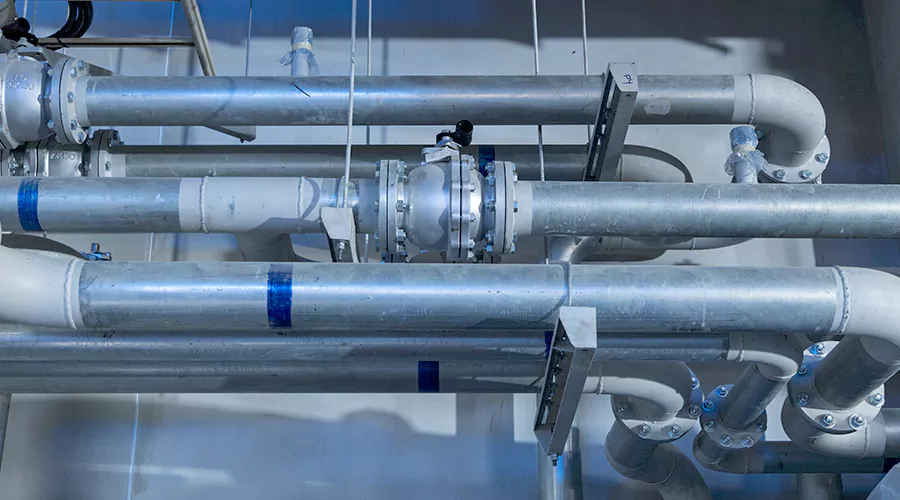
Cold water pipes sweat because humid indoor air touches pipe surfaces that are colder than the air's dew point. Water vapor then condenses into droplets, even when the pipe has no leak. The problem is common in warm, humid basements and during summer, when cold supply water passes through damp indoor spaces.
Continuous dripping can wet insulation and flooring. Lower humidity and correctly fitted pipe insulation often solve the problem, but first rule out a leaking fitting. If a damaged fitting or leaking connection is responsible, professional pipe repair can help prevent further moisture damage.
What Causes Condensation on Cold Water Pipes?
Condensation forms when a pipe surface falls below the air's dew point. Several household conditions make this more likely.
High Indoor Humidity
Basements and laundry rooms can retain humidity, especially with inadequate ventilation. Moisture-producing appliances make condensation more likely.
Very Cold Incoming Water
Water from underground service piping can be cooler than the surrounding room. The temperature difference may be especially noticeable after someone runs a faucet for several minutes. Fresh cold water continuously cools the pipe's outer surface, encouraging condensation when humidity is high.
Missing or Damaged Pipe Insulation
Bare pipes expose cold surfaces to room air. Gaps in insulation let moisture form underneath, so separated seams may not stop sweating.
Poor Airflow and Building Moisture
Cabinets and ceiling cavities can trap humid air. Basement seepage or improperly vented dryers can worsen the problem.
Is the Pipe Sweating or Actually Leaking?
Condensation often forms as many small droplets along an exposed cold pipe. A leak may create a more concentrated wet spot at a joint or pinhole, although the two can look similar. Wiping the surface and observing where moisture returns helps narrow down the source.
| What you notice | Possible explanation | Useful check |
|---|---|---|
| Droplets spread along cold pipe | Condensation | Measure room humidity |
| Water first appears at one fitting | Pipe connection leak | Inspect joint safely |
| Moisture worsens on humid days | Condensation | Compare weather and indoor humidity |
| Pipe stays wet after cold supply is off | Possible leak or trapped moisture | Observe after drying |
| Wetness occurs near both hot and cold pipes | Leak or another moisture source | Trace earliest wet point |
| Water meter moves with all uses off | Possible supply leak | Check unintended water use |
A leak and condensation can occur together, so investigate persistent puddles.
How Can You Test Sweating Pipes Safely?
You don't need to disconnect plumbing to perform an initial inspection. A small humidity meter can reveal whether the room is unusually damp, while careful visual checks may identify a localized leak. Avoid touching wet equipment near electrical wiring.
- Dry a safely accessible section of cold pipe with a clean towel.
- Note whether water returns over the entire surface or near one fitting.
- Check the room's relative humidity with a hygrometer.
- Compare the pipe with nearby windows or other cold surfaces.
- Observe whether droplets increase during cold-water use.
- Look for wet cabinets, insulation, or flooring underneath.
- If a leak is suspected, compare water-meter readings while all uses are off.
- Stop the inspection if moisture is near energized electrical equipment.
Humidity below 60 percent is commonly recommended indoors, with 30 to 50 percent a preferred range when practical. The exact dew point depends on both humidity and temperature, so a single humidity measurement doesn't prove the pipe is leak-free.
How Do You Stop Cold Water Pipes From Sweating?
Reduce Moisture in the Room
Use appropriate ventilation and repair sources of unwanted moisture. In humid climates, a dehumidifier or correctly operating air conditioner can be more effective than opening a window to damp outdoor air. Keep relative humidity under control while checking that laundry equipment vents properly.
Insulate the Cold-Water Pipe
Closed-cell foam pipe insulation can limit contact between humid air and the cold pipe surface. Choose insulation sized for the pipe's outer diameter, and seal seams and joints according to the product instructions. Gaps can allow condensation to form beneath the sleeve, so continuous coverage matters.
Keep Vulnerable Spaces Dry
Repair basement seepage and maintain drainage around the foundation. Dry cabinet interiors and inspect materials already affected by dripping. Insulation cannot correct a leaking pipe, so fix confirmed plumbing defects before covering them.
Can Sweating Pipes Cause Mold or Water Damage?
Yes. Persistent droplets can soak porous materials and create conditions that support mold growth. Water may also stain ceilings or cause wood-based cabinetry to swell over time. Moisture hidden inside a wall cavity deserves greater attention because it can remain unnoticed for weeks.
Dry wet materials promptly and address the humidity source. If extensive mold or concealed water damage is present, professional assessment may be needed before the area is enclosed again.
How Much Does Fixing Sweating Pipes Cost in 2026?
Costs depend on whether simple insulation is sufficient or the building needs humidity control. These rough U.S. planning estimates exclude concealed wall repairs and major plumbing work.
| Repair or improvement | Approximate cost |
|---|---|
| Basic pipe-insulation materials | 1–5 per linear foot |
| Small indoor humidity meter | 10–30 |
| Portable dehumidifier | 150–350 |
| Plumbing inspection for suspected leak | 100–300 for a basic visit |
| Repair a confirmed pipe leak | Depends on material and access |
A dehumidifier adds operating costs. Address ongoing water intrusion whenever possible.
When Should You Call a Professional?
Call a plumber if water appears concentrated at a joint or continues after the surface has been dried and humidity reduced. A heating and cooling specialist can assess persistent indoor humidity or poorly ventilated spaces. Water near electrical equipment requires immediate caution and a safe shutdown when appropriate.
How Can You Prevent Pipe Sweating From Returning?
Track indoor humidity during humid seasons and inspect insulation where pipes enter cool spaces. Keep basement and crawl-space moisture problems under control rather than relying only on pipe sleeves. Replace damaged insulation after confirming the piping beneath is dry.
- Monthly in humid weather: Check exposed cold lines for droplets.
- After insulation work: Inspect seams for gaps.
- After heavy rain: Look for basement or crawl-space moisture.
- When a puddle develops: Rule out a supply leak before assuming condensation.
Common Questions About Sweating Cold Water Pipes
Is it normal for cold pipes to sweat in summer?
It is common when humid air contacts a cold surface. Ongoing dripping still needs attention to prevent water damage.
Can plastic pipes sweat like copper pipes?
Yes. Any sufficiently cold pipe surface can collect condensation when the surrounding air is humid.
Will wrapping pipes stop condensation completely?
Correctly installed insulation often helps considerably. Gaps and high humidity may allow moisture to persist.
Does sweating mean the pipe has a hole?
No. Condensation forms on the outside of an intact pipe, although a real leak should be ruled out.
Can a dehumidifier fix sweating water pipes?
It can lower humidity enough to reduce condensation. Pipe insulation may still be needed where surfaces remain cold.